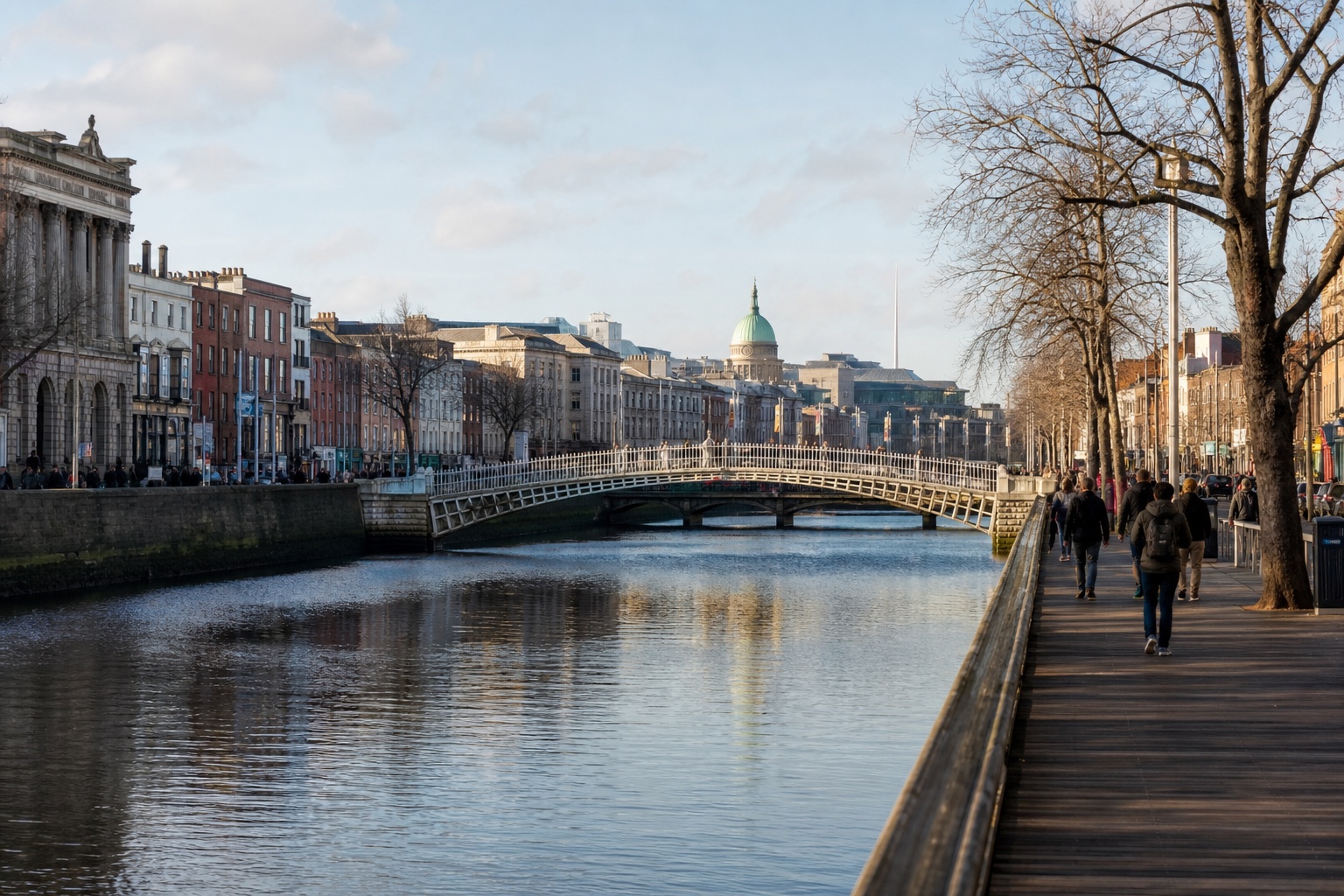
Dublin's central sights are close enough to walk, but their stories stretch far beyond a compact map. Trinity, Dublin Castle, the cathedral area, Georgian squares, museums, and sites connected to independence and civil conflict should be grouped by geography and interest rather than stacked as interchangeable historic stops.
Choose the reservations that matter
The Book of Kells experience, Kilmainham Gaol, and major branded visitor sites can require advance booking. Decide which supports the trip's interests and build outward from that time. National museums offer substantial context and may be a better use of an afternoon than collecting every famous paid attraction. Check current hours and temporary closures before relying on any listing.
Pubs are social places, not stage sets. Seek live traditional music with respect for performers and regulars, buy appropriately, and avoid assuming Temple Bar is the entire evening city. Literary Dublin also lives in libraries, theaters, streets, and contemporary writing rather than only author-themed venues.
Rain is ordinary rather than exceptional. A waterproof layer and flexible indoor sequence work better than moving every outdoor stop to one uncertain afternoon.
Separate Dublin from the road trip
Howth or another nearby coastal outing can fit a day when weather and rail conditions cooperate. The Wild Atlantic Way cannot. A western route needs a vehicle or transport strategy, left-side driving awareness, realistic distances, and overnight bases. Do not place a long drive after a full city schedule.
The Dublin to western Ireland itinerary makes that transition explicit. Start with the first-timer collection, then plan your Dublin trip around a few meaningful reservations, walkable history, and one honest evening.